

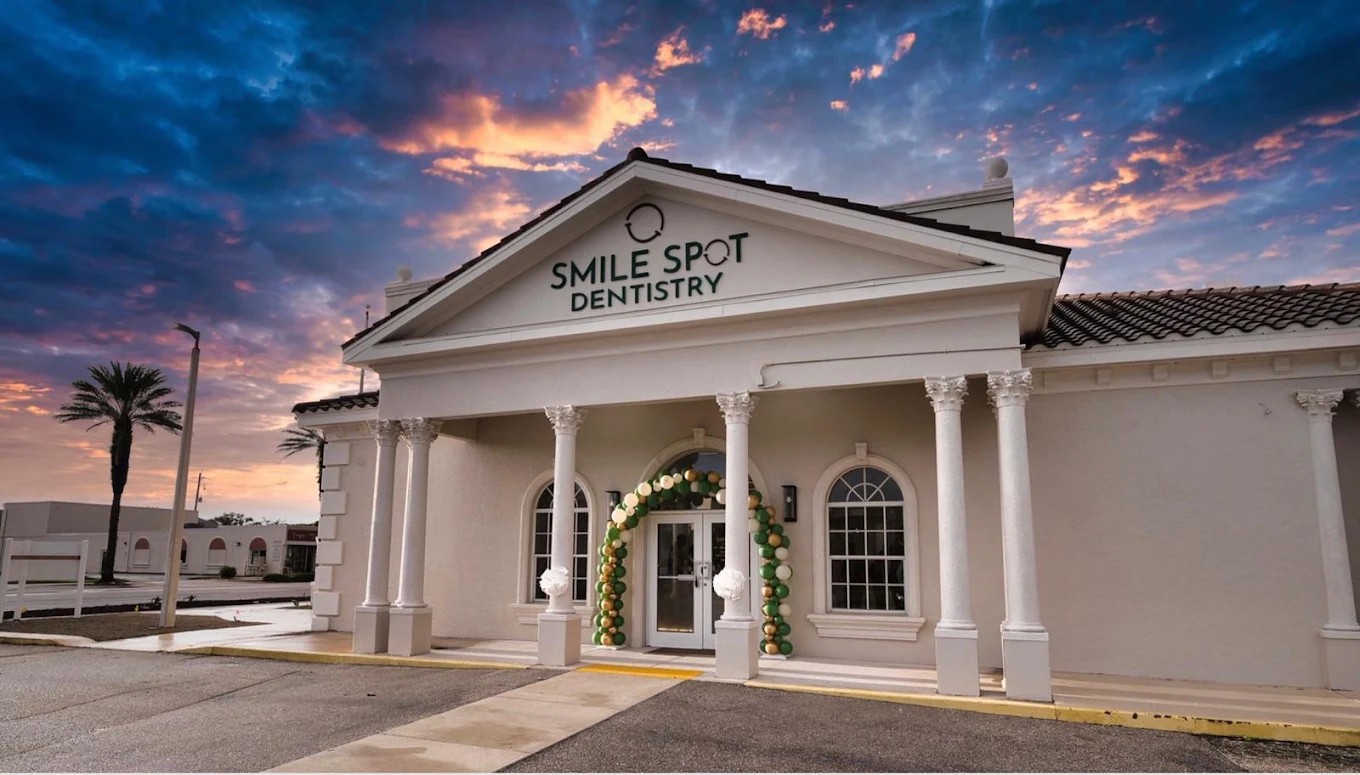
Anytime Picture partnered with Smile Spot Dentistry on a Sarasota-area photography and video project designed to communicate the practice’s people, environment and attention to detail. The assignment brought together professional portraits, interior photography, dental product imagery and video to create a consistent visual foundation for the practice’s website, patient education and marketing. This case study explores the communication challenge, the creative approach and the role each type of content played in telling the Smile Spot story.
Project overview: translating a dental practice into a clear brand story
Smile Spot Dentistry serves patients in Venice and Sarasota, Florida. For a practice whose identity includes personal attention, clinical detail and a welcoming environment, the quality of its online presentation matters. A prospective patient’s first introduction may happen through a website long before a conversation with the team.
Our role was to help make that introduction more informative and more personal. The scope included photography and videography of the practice, along with imagery related to crowns, Invisalign and the dental lab. These subjects offered different ways to explain the same organization: who provides the care, what the setting feels like and how attention to detail appears in the work.
The central objective was consistency. A portrait, an interior photograph and a close-up of a dental restoration serve different purposes, but they should still feel connected. We approached the assignment as a coordinated body of content that could support the practice’s broader communication, rather than a collection of unrelated images.
Meet the Woman Behind the Smile
Led by Dr. Meenachi Sellappan, DDS, the practice has a personal identity that is important to its story. Introducing the doctor gives visitors a person to connect with before they begin exploring services, technology or treatment information.
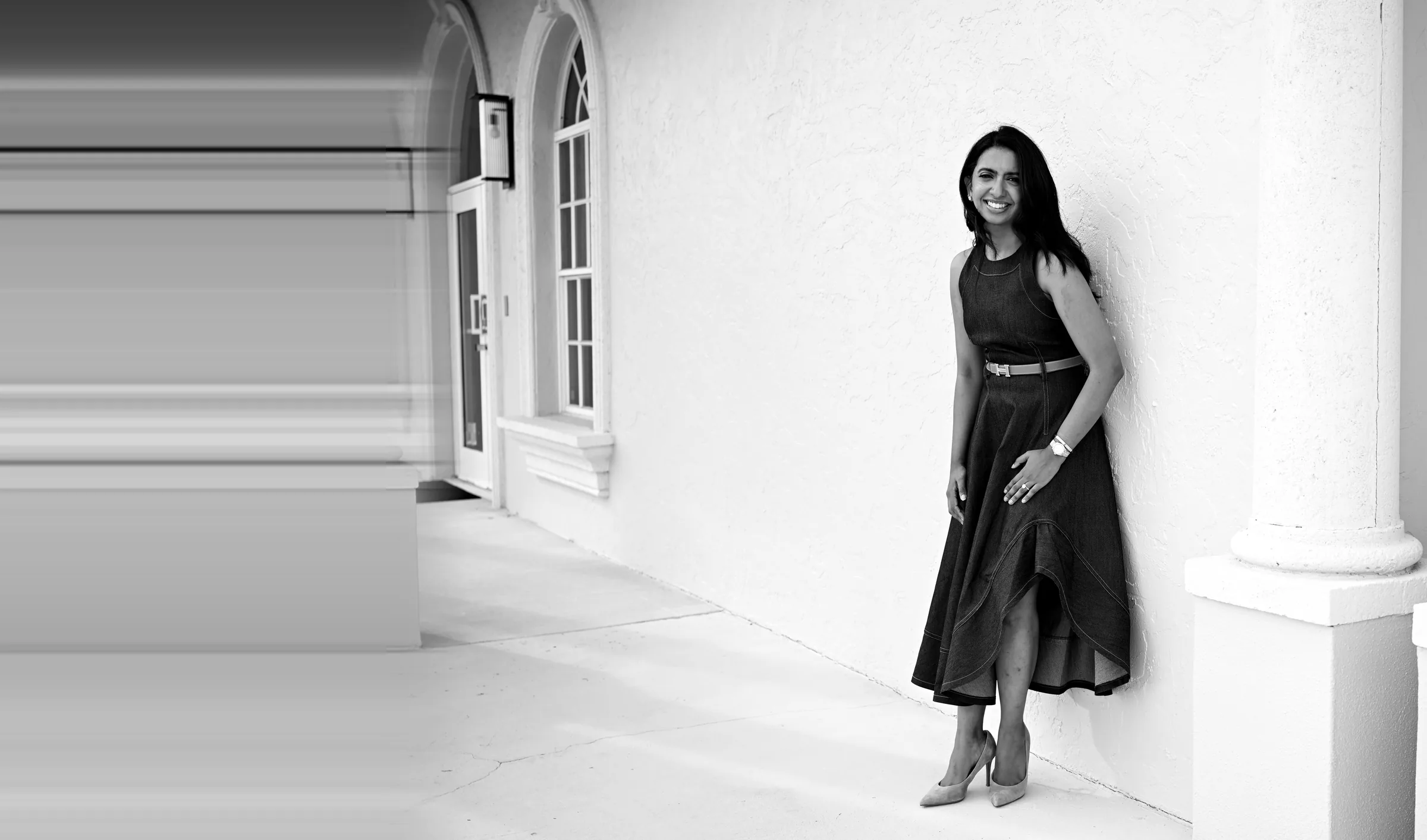
For this type of healthcare project, portraiture has a specific communication role. It should convey professionalism while remaining approachable. Expression, posture, surroundings and composition all influence how a viewer reads an image. The goal is a portrait that belongs naturally within the practice’s identity and offers a clear, human introduction.
The black-and-white portrait shown here creates that introduction with a simple architectural setting and a relaxed expression. Its open composition gives the image room to breathe, while keeping attention on the person. Within the case study, it anchors the discussion of the doctor without requiring a large gallery to establish the practice’s character.
The communication challenge: showing precision and approachability together
Dental photography needs to communicate more than the appearance of a room or a piece of equipment. It must help a person unfamiliar with the practice understand what they are seeing and why it belongs in the story. Technical subjects can be visually complex, while a purely lifestyle-focused presentation can leave important aspects of the practice unexplained.
Our creative challenge was to give both sides appropriate attention. The people and environment establish the human context. Product details and lab imagery introduce the technical work. A consistent visual approach allows these subjects to sit together without making the overall presentation feel fragmented.
This distinction shaped the purpose of the content. The images were intended to support an introduction to the practice and its processes. They were not a substitute for clinical explanations or evidence of a particular treatment outcome. Clear, relevant imagery gives the team a stronger starting point for those conversations.
Creative approach: connecting people, place and process
We organized the visual story around three complementary subjects: people, place and process. People give the practice a recognizable identity. The space provides context for a visit. Process-oriented imagery helps explain the attention behind the work. Together, they provide a more complete introduction than any one category can deliver on its own.
Across those subjects, our emphasis was on clarity and a composed presentation. Each image needed a clear point of interest and a reason to be included. For a portrait, that focus is the person. For an interior, it is the character and arrangement of the space. For a dental product, it may be an edge, a surface or a subtle change in tone.
This approach also supports a text-led case study. With a small selection of media on the page, the writing can explain the assignment and its purpose, while the portrait and film provide specific visual reference points. Visitors can understand the work without needing to move through an extensive gallery.
Interior photography and video: introducing the environment
The physical setting is an important part of a dental practice’s public presentation. Interior photography can help visitors understand the reception area, the layout and the atmosphere before arriving. For Smile Spot, the environment provided an opportunity to extend the same sense of consideration that informed the people-focused content.
Still photography and video contribute in different ways. A photograph gives a viewer time to examine a space. Motion introduces a sequence and a sense of movement through it. Used together, they can make an unfamiliar location easier to picture and provide context for the written introduction.
The short office film near the beginning of this article gives the setting an immediate presence. Its placement allows visitors to see the space before reading the detailed project discussion. The video complements the case study by providing atmosphere, while the text explains the production objectives and the broader scope of the assignment.
Dental product photography: making small details legible
The product component of the project included crowns and Invisalign-related imagery. These subjects require careful visual treatment because much of their character lies in small details. Shape, translucency, surface texture and reflective edges can be difficult to communicate clearly in an ordinary photograph.
For a crown, the image needs to make the form and surface understandable. For a transparent aligner, separation from the background is particularly important. The photographic task is to present the subject clearly enough that it can support an explanation, while maintaining a polished appearance consistent with the rest of the practice’s content.
Product imagery also adds specificity to a brand story. Rather than relying entirely on broad descriptions of attention to detail, it gives the audience something concrete to examine. In this project, it connected the practice’s overall presentation to the smaller objects and materials involved in its work.
Dental lab imagery: providing context for technology
The dental lab was another part of the assignment. Lab imagery can help connect a finished restoration with the tools and work that surround it. Equipment alone is rarely a complete story; its value as communication becomes clearer when it is presented within the context of the practice.
Our aim was to make these subjects approachable without oversimplifying them. The imagery supported discussion of dental technology and the attention given to planning and fabrication. Showing a process-related detail alongside the people and environment helps the audience understand that the technical work belongs to a broader experience of care.
For future website or educational use, this type of content can sit beside explanations written by the clinical team. The photographs provide visual context, while the accompanying copy supplies the precise information a patient needs.
Project outcome: a coordinated foundation for communication
The project brought together photography, video and dental product imagery around a single practice identity. The value of that combination lies in its range: portraits introduce the people, interiors establish the setting, film adds movement and product details support more focused explanations.
The resulting collection was intended to support Smile Spot’s website, patient education and future marketing. A coordinated set of assets gives a practice options for different pages and communication needs while retaining a recognizable visual character. This case study focuses on that creative outcome and the content’s intended uses; it does not attribute changes in bookings or business performance to the production.
For Anytime Picture, the assignment illustrates the importance of understanding a healthcare client before deciding how to present it. Professional dental photography and video should reflect the specific practice: its people, its environment and the details that give its work meaning. That understanding is what allows the finished content to feel relevant, consistent and useful.
Thoughtful media begins with understanding the people behind the practice.
Explore Anytime Picture’s dental photography and videography or tell us about your project.